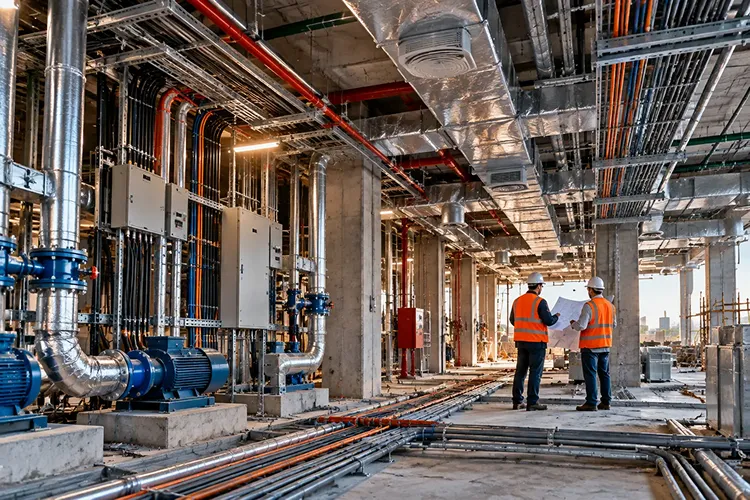

The efficiency of modern buildings relies on the integration of structural elements with electrical, mechanical, and plumbing systems, as electromechanical works play a fundamental role in providing a safe, comfortable, and functional environment.
These works are collectively known by the acronym MEP—encompassing mechanical, electrical, and plumbing systems—and represent a phase that requires meticulous planning and ongoing coordination with other project disciplines.
What is MEP work?
The term MEP refers to three key disciplines that work together to provide essential services within buildings.
First: Electrical Works
This includes the implementation of electrical systems that supply the building with the power required to operate devices and equipment, most notably:
- Cable and wire installations.
- Installation of electrical distribution boards.
- Preparing lighting points and electrical outlets.
- Implementation of grounding and protection systems.
- Provision of alarm and safety systems in accordance with the project scope.
Second: Mechanical works
These relate to systems that ensure operational efficiency and comfort within a building, and—depending on the nature of the project—include:
- Air conditioning and ventilation systems.
- Supply and installation of refrigeration units.
- Air ducts and associated installations.
- Firefighting systems.
- Some supporting mechanical systems.
Third: Plumbing Works
It deals with water and sewage networks, and includes:
- Water supply piping.
- Sewage networks.
- Installation of sanitary fixtures.
- Water drainage systems.
- Testing the connections and verifying their integrity.
Why are electromechanical works important?
The importance of MEP systems extends beyond the mere operation of a building; they directly influence energy efficiency, ease of maintenance, and the level of comfort and safety.
Among the most notable benefits of good execution are:
- Improving building operational efficiency.
- Reducing the likelihood of malfunctions and leaks.
- Achieving integration between different systems.
- Facilitating future maintenance work.
- Making better use of available spaces.
The Importance of Coordination Between Construction Works and MEP
One of the most significant challenges projects may face is a lack of coordination between structural and electromechanical works; utility routings can conflict with structural elements or interior design features if they are not reviewed in advance.
Therefore, service routes, equipment locations, and required openings must be determined before the execution of the associated phases, while also reviewing the plans to ensure coordination among the various disciplines.
Stages of executing electromechanical works
The process begins with reviewing the plans and identifying project requirements, followed by preparing the routes and installations; this is succeeded by the installation of systems and equipment, and the performance of necessary tests to verify the integrity of the connections and operational efficiency.
Each stage requires technical supervision and a review of the approved specifications to ensure that the work carried out aligns with the project requirements.
Mistakes to Avoid During the Implementation of MEP Systems
- Carrying out installations without reviewing the plans.
- Lack of coordination between electrical, plumbing, and HVAC (heating, ventilation, and air conditioning) layouts.
- Using materials unsuitable for the nature of the operation.
- Neglecting to test systems before closing up ceilings and walls.
- Failure to document the locations of installations, which hinders future maintenance.
MEP Solutions and Infrastructure at Bunyan Al-Rayyan
Bunyan Al-Rayyan Advanced Contracting provides electromechanical and foundational work services as part of its integrated project solutions, with a focus on coordinating between various disciplines and ensuring precise execution in accordance with the specific requirements of each project.
We aim to provide an integrated operational framework that supports building efficiency and facilitates its continued use.
Start your project with a reliable infrastructure
Successful execution of electromechanical works begins with planning and thrives through coordination and follow-up. If you are planning to construct a new building or develop an existing facility in Riyadh, contact Bunyan Al-Rayyan to discuss your project’s requirements and the appropriate solutions.